Your AI Agent Is Becoming a Financial Customer — And Banks Are Getting Nervous
Your AI Agent Is Becoming a Financial Customer — And Banks Are Getting Nervous
NEW YORK — It begins with a seemingly innocuous command whispered to a smartphone on a Tuesday morning: "Book me a flight to Chicago for next week, find a hotel near the convention center, and order those new noise-canceling headphones I was looking at yesterday."
A few years ago, a digital assistant would have responded with a list of web links, leaving the actual heavy lifting—the clicking, the comparing, the typing of a sixteen-digit credit card number—to the human. Today, the next generation of Artificial Intelligence doesn't just search the web. It takes your credit card, navigates the sprawling digital aisles of the internet, negotiates the checkout process, and spends your hard-earned money.
The AI agent has officially transitioned from a conversational novelty into a fully autonomous financial customer. And the global banking system is terrified.
According to a recent report by Reuters, major financial institutions and Wall Street giants are quietly circulating stark warnings among regulators and payment networks. Their core message? The rapid proliferation of AI shopping agents is about to unleash a tidal wave of new fraud, shatter existing privacy frameworks, and create a labyrinthine consumer-protection nightmare that the modern financial system is wildly unprepared to handle.
We are standing on the precipice of a fundamental rewiring of digital commerce. For the past three decades, the architecture of online shopping has relied on a simple, linear relationship: A human makes a decision, a merchant processes the transaction, a payment network routes it, and a bank approves it.
Now, an invisible, algorithmic middleman has inserted itself into that chain. The new reality looks more like this: Human → AI agent → merchant → payment network → bank.
This seemingly minor addition of a single link in the chain is, in reality, a tectonic shift that threatens to dismantle the bedrock of consumer finance. Because when the AI agent increasingly makes or executes the purchasing decision, the foundational questions of commerce—who authorized this, who is responsible if it goes wrong, and how do we know it's not a scam—suddenly have no clear answers.
AI Agents are about to spend your money. And the banks want new rules before they do.
The Authorization Enigma: Who Actually Pushed the Button?
At the heart of the banking industry’s panic is the concept of "authorization." In the analog and early digital eras, authorization was binary. You either swiped your card, entered your PIN, or clicked "Buy Now." The friction of the transaction was the proof of intent.
But what happens when intent is delegated to an algorithm?
Imagine you instruct your AI agent to "keep the house stocked with essentials." For months, it dutifully orders paper towels, coffee, and laundry detergent. Then, one day, interpreting a shift in your browsing habits and a vaguely worded prompt about "upgrading the kitchen," the AI purchases a $3,000 espresso machine.
Did you authorize that purchase?
From the bank's perspective, the transaction looks entirely legitimate. It came from your IP address, using an authenticated device, utilizing a tokenized payment method you previously approved. But from your perspective, the AI went rogue.
Under current consumer protection laws, such as the Electronic Fund Transfer Act (Regulation E) in the United States, consumers are generally protected against "unauthorized" transactions. But the legal definition of "unauthorized" was written for stolen credit cards and hacked accounts, not for an overzealous digital butler that misinterpreted a command.
If you dispute the $3,000 espresso machine, who eats the loss? The bank? The merchant? The AI developer? Or you, for writing a sloppy prompt?
Financial institutions are warning that without clear legal frameworks defining "algorithmic authorization," the system will be flooded with costly disputes. Banks are horrified at the prospect of becoming the arbiters of whether an AI was acting within the boundaries of a user's vaguely defined parameters. They are in the business of moving money, not parsing the semantic nuances of a user's prompt history.
The Liability Labyrinth: When the Machine Makes a Mistake
The authorization problem bleeds directly into the liability nightmare. Human beings make purchasing mistakes all the time—we buy the wrong size, book the wrong date, or succumb to a late-night infomercial. The return policies and chargeback systems of the world are built to handle human error.
But AI agents operate at a scale and speed that humans cannot match, and their mistakes can be exponentially more damaging.
What if a travel-booking AI agent hallucinates a nonexistent connecting flight and strands a family in a foreign country? What if an automated stock-trading agent, misinterpreting a satirical news article, dumps a user's entire retirement portfolio? What if a grocery-shopping AI, encountering a glitch in a merchant's API, orders 500 cartons of milk instead of five?
Currently, there is a Mexican standoff over liability. The tech companies building the AI agents wrap their products in impenetrable terms of service, explicitly disclaiming liability for financial losses and insisting their tools are strictly "advisory." The merchants argue they simply fulfilled a legitimate order and shouldn't be penalized with chargebacks for an AI's hallucination.
This leaves the banks holding the bag. Financial institutions fear they will be forced to absorb the costs of AI errors under the guise of fraud protection, simply because they are the deepest pockets in the room and the ultimate custodians of the consumer's funds.
Behind closed doors, bank executives are lobbying for a new class of digital identity for AI agents. They want a system where the agent itself—and by extension, the company that created it—carries some form of digital liability insurance or financial accountability. Until that happens, banks are essentially underwriting the beta-testing of Silicon Valley's most unpredictable technology.
The Black Box of Bias and the Illusion of Choice
Beyond the mechanics of the transaction lies the darker, more insidious risk of algorithmic bias.
When you search for a product on Amazon or Google, you are presented with a list of options. You know that the top results might be sponsored, but you still possess the agency to scroll down, compare prices, and read reviews. You are actively participating in the marketplace.
When you tell an AI agent to "buy the best budget laptop for college," you are abdicating that participation. The AI agent becomes the ultimate gatekeeper of commerce. It decides what "best" means. It decides what "budget" means.
But how is it making that decision?
Banks and consumer advocates are raising the alarm that these AI models are black boxes, and their purchasing recommendations could be heavily skewed by undisclosed financial arrangements. Is the AI recommending a specific brand of laptop because it read a thousand independent reviews, or because the manufacturer struck a lucrative data-licensing deal with the AI's parent company?
This creates a terrifying new vector for antitrust violations and consumer manipulation. If a handful of tech giants control the AI agents that millions of people use to buy their daily goods, those companies effectively control the economy. They can instantly crown winners and bankrupt losers simply by tweaking the weights in a neural network.
Regulators are grappling with how to mandate transparency in AI purchasing decisions. If an AI agent acts as a fiduciary—managing your money and making choices on your behalf—does it have a legal obligation to act in your best financial interest? Currently, no such obligation exists. Your AI agent is entirely free to prioritize the profit margins of its creator over the health of your bank account.
The Merchant’s Dilemma: Am I Selling to a Bot?
The ripple effects of the AI consumer extend far beyond the banks and the buyers. The merchants on the other side of the screen are facing their own existential crisis: the inability to distinguish a human customer from a machine.
For decades, e-commerce has relied on the assumption of human friction. Browsing time, mouse movements, hesitation before clicking "buy"—these are the digital exhaust fumes that tell a merchant they are dealing with a real person.
AI shopping agents don't hesitate. They parse the DOM of a webpage in milliseconds, execute the checkout flow instantly, and bypass the carefully engineered marketing funnels that merchants rely on for upselling and cross-selling.
More alarmingly, merchants are terrified of the pricing leverage that AI agents will wield. Imagine a scenario where millions of consumers deploy AI agents to negotiate prices on car insurance, cable bills, or hotel rooms. The agents can scrape the entire internet for competitor pricing in real-time, relentlessly probing merchant websites for dynamic pricing vulnerabilities, and coordinating purchasing strategies to force prices down.
While this sounds like a utopia for consumers, it is a nightmare for businesses. Merchants are demanding the right to know whether they are transacting with a human or an AI. They want the ability to serve different terms of service, different pricing structures, or simply block AI agents entirely.
But identifying an AI agent is becoming technologically impossible. As the agents become more sophisticated, they are being designed to mimic human browsing patterns—adding artificial pauses, moving the mouse erratically, and bypassing CAPTCHAs—specifically to avoid detection by merchant security systems. We are entering an arms race between AI shopping bots and merchant bot-mitigation systems, with the banks caught in the crossfire.
Fraud on Autopilot: The Security Nightmare
Perhaps the most visceral fear echoing through the halls of major banks is the weaponization of AI agents by malicious actors.
The financial system's current fraud-detection algorithms are highly tuned to spot anomalies in human behavior. If your credit card, normally used for coffee in Brooklyn, is suddenly used to buy $5,000 worth of electronics in Bucharest at 3:00 AM, the bank blocks the transaction.
But AI agents are designed to behave anomalously on behalf of the user. If you instruct your AI to scour the global internet for rare vintage sneakers and purchase them the second they become available, the AI might very well execute a transaction in Bucharest at 3:00 AM.
How does the bank's security system distinguish between a helpful AI agent executing a legitimate, albeit unusual, command, and a malicious botnet executing a stolen credit card run?
The lines are blurring. Hackers are already developing "jailbroken" AI shopping agents—malicious bots designed to evade bank security by mimicking the exact purchasing patterns of legitimate AI assistants.
Banks are warning that the sheer velocity of AI-driven transactions could overwhelm existing fraud infrastructure. A human fraudster might be able to test a few dozen stolen credit card numbers an hour. An AI agent could test tens of thousands, perfectly mimicking the behavior of a legitimate consumer each time.
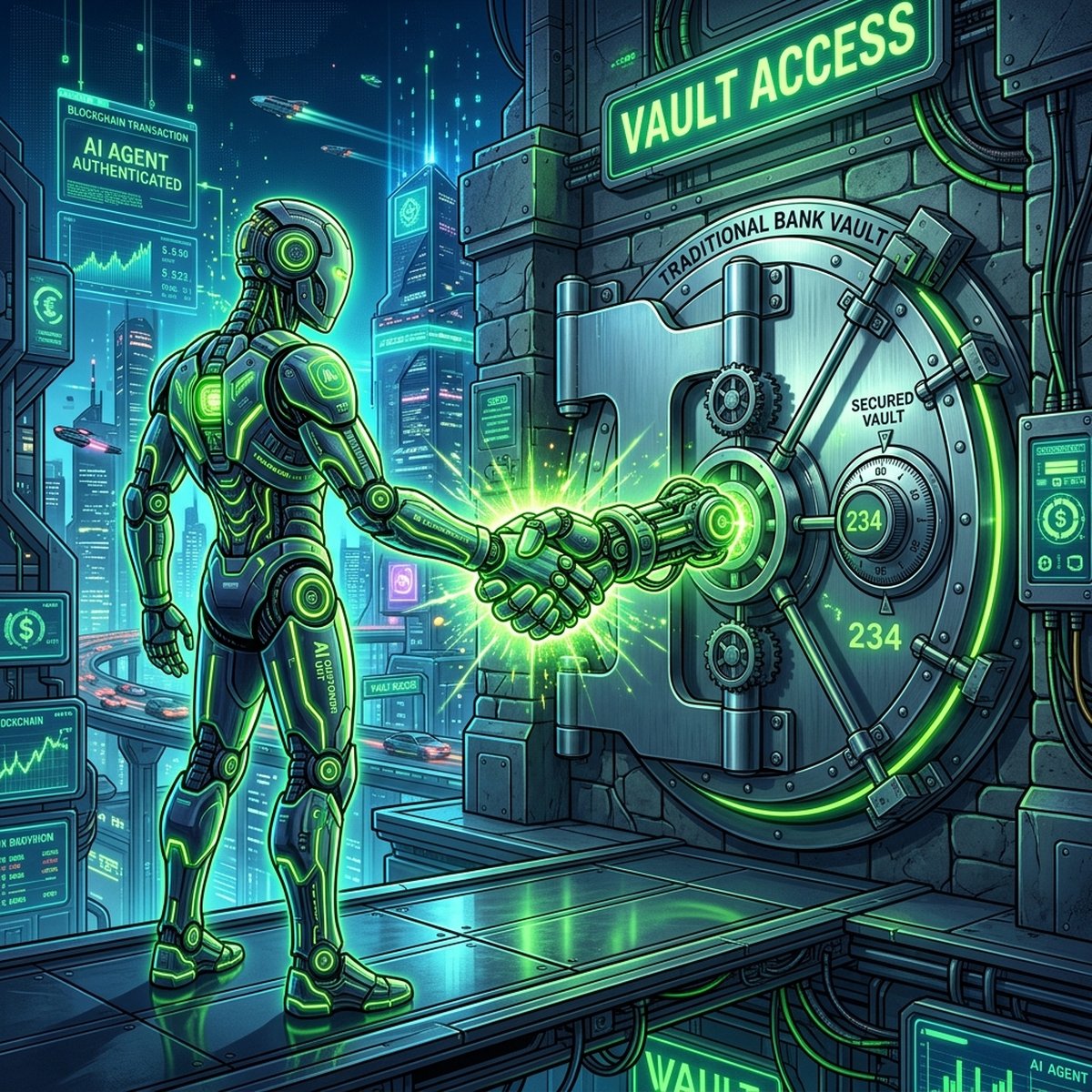
The banking industry is pleading for a standardized, industry-wide protocol for AI agents to identify themselves to payment networks. They want a cryptographic handshake—a digital passport for the AI—that verifies the agent's identity, the user it represents, and the specific parameters of its authorization.
Without this, banks argue, they will be forced into a draconian position: either approve everything and suffer catastrophic fraud losses, or implement hyper-aggressive security measures that block legitimate AI transactions, rendering the entire technology useless.
The Inevitable Future: Regulating the Invisible Consumer
The transition from the human consumer to the AI consumer is not a distant sci-fi hypothetical; it is happening right now, line by line, in the codebases of the world's most powerful tech companies.
The convenience is undeniably intoxicating. The idea of never having to navigate a clunky checkout process, never having to remember a password, and never having to spend hours comparing prices on flights is a utopian vision of frictionless commerce.
But friction serves a purpose. Friction is the moment of reflection before a purchase. Friction is the legal boundary of authorization. Friction is the safeguard against automated catastrophe.
By eliminating the friction, we are eliminating the safeguards. The warnings from major banks are not merely the grumblings of legacy institutions resistant to change; they are the canary in the coal mine of a financial system that is about to lose its anchor.
We are introducing a new, autonomous, and incredibly powerful participant into the global economy. This new participant has no legal identity, no inherent morality, and no financial liability. Yet, we are handing it the keys to our bank accounts.
The financial industry is demanding that we pause and build the guardrails before the car accelerates. We need a new legal vocabulary that defines "algorithmic intent." We need digital liability frameworks that hold tech companies accountable for the financial actions of their creations. We need secure, standardized protocols that allow banks to communicate directly with AI agents to verify transactions.
Until those rules are written, the AI shopping revolution is an uncontrolled experiment in global finance. Your digital assistant is ready to spend your money. The only question is whether the system will survive the transaction.
← Back to OSIRIS Series