Meta's AI Agent Has a Privacy Problem Nobody Can Solve With a Better Model
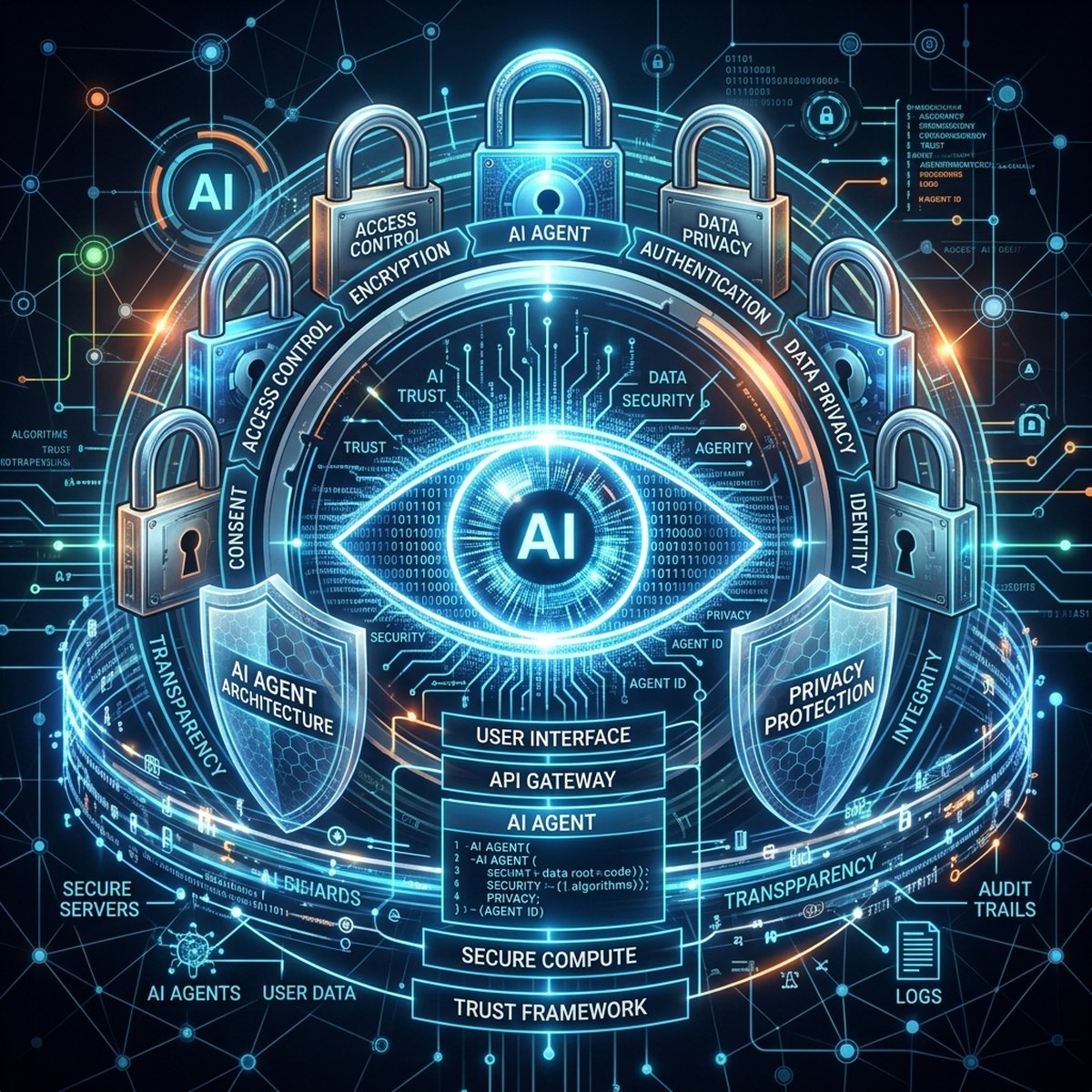
The Architecture of Trust: Why Meta's New AI Has a Privacy Problem That Better Models Can't Solve
MENLO PARK, California — It begins with a seemingly innocuous request. "Book me a flight to Seattle for next weekend, and reschedule my dentist appointment."
In the span of a few seconds, an artificial intelligence agent must access your calendar, parse your personal emails for airline preferences, retrieve your credit card details, initiate a web session to book the flight, and place a phone call to a medical office—all while maintaining the seamless, friction-free experience that Silicon Valley has promised for a decade.
This is the promise of Meta's Muse, the tech giant's most ambitious foray into the world of autonomous AI agents. But as the capabilities of these systems expand from answering trivia to actively managing our lives, a fundamental flaw is emerging in the foundation of the personal AI revolution.
The problem isn't the model. It's the sprawling, porous, and heavily populated ecosystem the model must interact with.
Recent reports from Reuters indicating that Meta is testing a "human concierge" system—where human contractors step in to handle some calls and tasks initiated through Muse—have thrown this vulnerability into sharp relief. Meta has been quick to defend its security architecture. The company points to Muse's dedicated Secure VM, its isolated Sentinel security layer, comprehensive audit trails, and granular user permissions.
But these technical defenses miss the forest for the trees. The crisis looming over personal AI isn't simply a matter of whether a mathematical model can keep a secret. It is a profound, unresolved question of trust architecture: How many disparate systems, third-party organizations, and anonymous human beings must be trusted for an AI agent to act on your behalf?
The Illusion of the Vault
For years, the public conversation around AI privacy has focused almost exclusively on the training data and the models themselves. We ask if ChatGPT will memorize our personal information, or if Midjourney is stealing copyrighted art. Tech companies have responded by building thicker walls around their algorithms, promising that our data is encrypted, anonymized, and forgotten the moment a session ends.
Meta's approach with Muse embodies this philosophy. The Sentinel security layer and the Secure VM are designed to act as a digital vault. According to Meta's whitepapers, when Muse processes your request, it does so in a highly protected environment, walled off from the rest of the internet and even from Meta's core advertising apparatus.
But an agent, by definition, cannot live in a vault.
To be useful, an agent must act. It must reach out into the messy, insecure, legacy infrastructure of the internet and the physical world. It needs your passwords. It needs your payment credentials. It needs access to your physical surroundings via your smartphone's camera and microphone.
When Muse books that flight to Seattle, the data leaves the Secure VM. It travels through payment gateways, airline booking systems, and third-party APIs. When it calls the dentist, it interacts with telecommunications networks and, crucially, the receptionist at the dental office.
Every interaction is a new vector for exposure. The model may be perfectly secure, but the architecture of the tasks it performs is fundamentally insecure.
The Human Element: When Algorithms Need a Helping Hand
The Reuters revelation regarding Meta's "human concierge" testing is the most glaring example of this architectural vulnerability.
The reality of current AI technology is that it often stumbles when confronted with the friction of the real world. Automated phone menus change. Websites implement anti-bot CAPTCHAs. Humans on the other end of a phone line speak with accents, use slang, or ask clarifying questions that confound natural language processors.
To bridge this gap and maintain the illusion of a highly capable agent, tech companies are increasingly relying on human "fallbacks." When the AI gets stuck, the task is seamlessly routed to a human contractor in a call center, often halfway across the world.
This introduces a massive, undeniable privacy risk. Suddenly, the deeply personal context required to complete a task—your medical history for the dentist, your passport details for the flight, the tone of a sensitive email you asked the agent to draft—is exposed to a human stranger.
Meta insists that these contractors are heavily vetted and that data is redacted to the greatest extent possible. But history has shown that human-in-the-loop systems are inherently leaky. Contractors have been caught listening to private Alexa recordings and reading personal Google Assistant transcripts. The more context an agent requires, the more sensitive the data exposed to these human fallbacks becomes.
A Web of Entanglements
The trust problem extends far beyond human contractors. Consider the sheer number of corporate entities involved in a single, complex agentic task.
If Muse attempts to buy a gift and send it to your mother, it must interact with Amazon or another retailer. It might need to read an email from Gmail to find her new address. It will use a Visa or Mastercard payment rail. It may use FedEx or UPS for tracking.
For the user, this feels like a single interaction with "Meta." In reality, it is a massive, multi-party data transaction. The user is forced to implicitly trust not just Meta's security protocols, but the security protocols of every downstream partner the agent interacts with.
"We are moving from a paradigm of direct user consent to delegated, cascading consent," says Dr. Aranya Sharma, a privacy researcher at the Stanford Internet Observatory. "When you give an AI agent permission to manage your calendar, you aren't just trusting the AI company. You are trusting the agent's judgment in deciding which other systems and companies it needs to share your data with to get the job done. That is a terrifying loss of control."
The Permissions Paradox
Meta’s answer to this loss of control is granular permissions and audit trails. The pitch is that users will always have the final say, approving or denying Muse’s access to specific apps and services.
But this creates a paradoxical user experience. If a user is forced to manually approve every API call, every data transfer, and every third-party interaction, the agent ceases to be useful. It becomes a nagging, bureaucratic hurdle rather than a helpful assistant.
Conversely, if users succumb to "permissions fatigue" and simply click "Allow All"—as they have done for decades with smartphone apps and cookie banners—the agent gains unchecked access to a terrifyingly comprehensive digital footprint.
The audit trails, while useful for post-mortem analysis after a breach, do little to prevent the initial exposure. They are the digital equivalent of a security camera recording a burglary in progress.
The Zero-Trust Challenge
The tech industry is beginning to realize that the current architecture is unsustainable for true agentic AI. The buzzword circulating in Silicon Valley boardrooms is "Zero-Trust Architecture for Agents."
In theory, a zero-trust architecture would require every component of a transaction to continually verify its identity and authorization. The agent wouldn't hold your credit card number; it would negotiate a single-use, cryptographically secure token with your bank. It wouldn't read your entire inbox; it would use homomorphic encryption to query your email provider for a specific piece of information without ever "seeing" the raw data.
But building this infrastructure requires a level of industry-wide cooperation and standardization that currently does not exist. It requires banks, airlines, healthcare providers, and competing tech giants to agree on a universal framework for agentic communication and data exchange.
Given the current walled-garden approach favored by companies like Meta, Apple, and Google, this level of interoperability seems like a pipe dream. Everyone wants to own the agent, but no one wants to do the unglamorous, collaborative work of building the secure plumbing required to make it safe.
The True Cost of Convenience
As Meta pushes forward with Muse, and competitors like Google and OpenAI race to release their own agents, consumers are being presented with a Faustian bargain.
We are being offered an unprecedented level of convenience—the ability to offload the cognitive load of modern life to a tireless digital assistant. But the price of this convenience is the total exposure of our digital and physical lives to a fragile, interconnected web of models, humans, and third-party systems.
The personal AI revolution is here. But until the tech industry can solve the fundamental problem of trust architecture, the agents designed to manage our lives may end up being the greatest threat to our privacy we have ever faced. The vault may be secure, but the doors are wide open, and everyone is invited inside.
← Back to OSIRIS Series