**The Tesla Supply-Chain Playbook Is Becoming an AI Product**
The Tesla Supply-Chain Playbook Is Becoming an AI Product
In the gleaming, high-stakes corridors of modern manufacturing, a silent revolution is underway. For decades, the global supply chain has been a precarious balancing act—a massive, interconnected web of suppliers, shippers, and assembly lines constantly teetering on the edge of disruption. When the system works, it is an invisible miracle of modern commerce. When it fails, as the world painfully learned during the pandemic, the economic fallout is swift and devastating.
Now, the engineers who helped master the chaos at one of the world's most aggressive and innovative manufacturers are taking their playbook public. Atomic, a new startup founded by former Tesla supply-chain veterans, has just emerged with $12.5 million in funding. Their mission? To fundamentally transform how businesses manage their purchasing and inventory by injecting artificial intelligence directly into the nervous system of physical operations.
This is not just another dashboard or forecasting tool. Atomic represents a pivotal shift in enterprise software: the transition from AI as an advisor to AI as an operator. We are entering an era where software doesn't just analyze a business—it runs it.
From Recommendation to Execution: A Paradigm Shift
To understand the magnitude of what Atomic is building, one must first look at the legacy systems that currently govern global commerce. For years, supply-chain software has functioned essentially as a highly sophisticated alarm clock. It ingests data, identifies trends, and flashes warnings when something goes wrong.
Traditional enterprise resource planning (ERP) software operates on a simple premise: "Here is the forecast." It might tell a procurement manager that there is a 70% chance they will run out of microchips in three weeks, or that a hurricane in the Pacific could delay a crucial shipment of steel. But once that information is presented, the software stops. It waits for a human to interpret the data, call the supplier, negotiate terms, and manually adjust the purchase order.
This human-in-the-loop model was sufficient in an era of relative stability, where global trade flows were predictable and supply shocks were rare. But in today's hyper-volatile market, the latency introduced by human decision-making is a critical vulnerability. By the time a procurement team analyzes an alert, convenes a meeting, and decides on a course of action, the optimal window for mitigation has often closed.
Atomic flips this paradigm entirely. The AI-native approach is not just about highlighting a problem; it is about solving it before a human even realizes it exists. The new paradigm is: "Here is the forecast, and I have already adjusted the order."
This leap from recommendation to execution is the holy grail of enterprise AI. By simulating thousands of potential scenarios in real-time—from geopolitical shocks to sudden spikes in consumer demand—Atomic's system can evaluate the optimal response and, crucially, pull the trigger. It is the difference between a weather app telling you it's going to rain and an umbrella that automatically opens over your head.
The Tesla Pedigree: Hard-Fought Lessons in Hyper-Growth
It is no coincidence that this leap is being spearheaded by alumni of Tesla. Over the last decade, Elon Musk’s electric vehicle giant has built a reputation not just for its cars, but for its ruthless, hyper-efficient approach to supply-chain management.
During the global semiconductor shortage that crippled traditional automakers, causing billions in lost revenue across Detroit, Stuttgart, and Tokyo, Tesla famously navigated the crisis with startling agility. They rewrote their vehicle software on the fly to accommodate alternative chips, bypassing the bottlenecks that had paralyzed their competitors.
At Tesla, supply-chain management is not treated as a back-office administrative function. It is viewed as a core engineering challenge, requiring the same level of rigorous innovation as battery chemistry or autonomous driving algorithms. The company operates with a level of vertical integration and supply-chain agility that legacy manufacturers are still struggling to comprehend, let alone replicate.
The founders of Atomic are steeped in this culture of aggressive optimization. They understand firsthand that in the physical economy, speed is a profound competitive advantage. Every hour spent waiting for a human procurement manager to approve an order is an hour where a competitor can scoop up available inventory or secure limited freight capacity. By automating these purchasing and inventory decisions, Atomic aims to democratize this "Tesla playbook," giving companies of all sizes the tools to operate with the same level of speed and precision previously reserved for Silicon Valley's most relentless innovators.
The Anatomy of an Autonomous Supply Chain
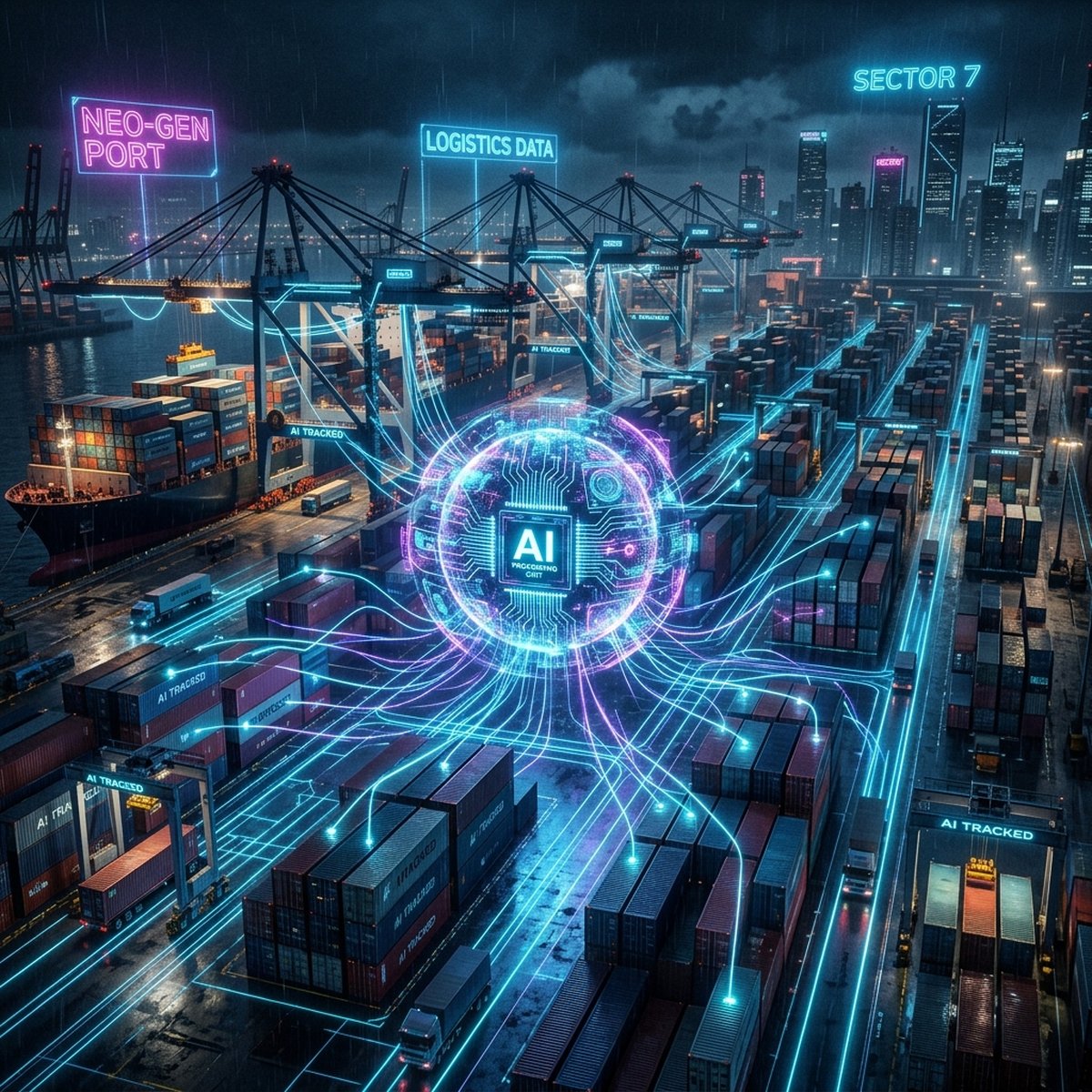
How does a system like Atomic actually work in practice? The architecture is complex, but the execution is remarkably elegant. It begins with the relentless ingestion of data, but unlike legacy systems, it doesn't end there. The platform integrates deeply into a company's existing data streams—real-time inventory levels, supplier lead times, pricing fluctuations, global shipping schedules, and even macroeconomic and geopolitical indicators.
Using advanced machine learning models, the system continuously runs complex Monte Carlo simulations. What happens if Supplier A in Taiwan experiences a two-week delay due to a localized power grid failure? What if the cost of raw aluminum spikes by 15% next month due to new trade tariffs? What if a viral social media trend suddenly quintuples demand for a specific SKU in the European market?
Traditional software requires a team of human analysts to manually construct and evaluate these "what-if" scenarios. Atomic does it autonomously, running millions of permutations a day. But the true innovation lies in the action layer. When the system detects a high-probability risk or opportunity, it consults a set of pre-defined parameters and business logic set by the company.
If the optimal response falls within those guardrails, the AI executes the transaction without waiting for human approval. It might automatically issue a purchase order to a secondary supplier in Mexico to mitigate a potential shortfall from Asia. It might delay a massive raw material order by 72 hours to capitalize on a forecasted price drop in the commodities market. It might autonomously rebalance inventory across different regional warehouses to optimize fulfillment times ahead of a major holiday shopping season.
For the human managers overseeing these operations, the role shifts dramatically from micro-manager to strategic overseer. Instead of drowning in spreadsheets, triaging emails, and chasing down delayed shipments, supply-chain professionals will act more like commercial airline pilots monitoring an advanced autopilot system. Their job will be to set the destination, define the safety parameters, monitor the system's overall health, and intervene only when the AI encounters a truly unprecedented anomaly that requires human intuition.
The Economic Connection: AI Enters the Physical Realm
The implications of this technology extend far beyond the walls of any single warehouse or corporate headquarters. As AI systems like Atomic become more prevalent and sophisticated, they will increasingly become the invisible hands guiding the physical economy.
We are moving rapidly toward a future where algorithms are economically connected to physical goods. When an AI decides to purchase a shipment of lithium, secure space on a container ship, or reroute a fleet of delivery trucks, it is moving real money and physical atoms across the globe.
This represents a profound shift in the nature of artificial intelligence. For the past decade, the most visible impacts of AI have largely been confined to the digital realm—optimizing ad clicks, curating social media feeds, suggesting movies, and, more recently, generating text or images.
Now, AI is stepping out of the screen and onto the factory floor, the shipping dock, and the freight terminal. It is negotiating prices, securing capacity, and managing the physical flow of global commerce. This convergence of the digital and physical economies will unlock unprecedented levels of efficiency, eliminating billions of dollars in waste and friction. But it also introduces entirely new complexities and systemic risks.
The Systemic Risks of Algorithmic Commerce
As with any transformative technology, the rise of autonomous supply chains is not without its perils, and the potential for unintended consequences is vast. What happens when multiple AI systems, operating autonomously on behalf of different, competing companies, interact in the open market?
Could we see the supply-chain equivalent of a "flash crash" in the stock market? Imagine a scenario where a minor anomaly in global shipping data triggers one AI system to aggressively stockpile a critical electronic component. If competing AI systems, monitoring the same data streams, detect this sudden surge in demand, they might aggressively follow suit. This could instantly create an artificial shortage, driving up prices exponentially in a self-reinforcing algorithmic loop that spirals out of control before human operators can hit the kill switch.
Furthermore, there is the thorny question of accountability and liability. When an AI makes a multi-million-dollar purchasing error—perhaps ordering ten times the required amount of perishable goods due to a flawed data input—who is ultimately responsible? The company that deployed the software? The startup that built the algorithm? The supplier who accepted and fulfilled the automated order? As these systems become more deeply integrated into the global economy, regulatory frameworks, insurance models, and legal precedents will need to evolve rapidly to address these novel and complex challenges.
There is also the undeniable human element. While platforms like Atomic promise to elevate supply-chain professionals to more strategic, analytical roles, the cold reality is that widespread automation often leads to significant workforce displacement in the short term. The transition will require massive reskilling and adaptation within the logistics and procurement sectors. The most successful professionals in the coming decade will not be those who can manually crunch numbers in Excel, but those who can seamlessly interface with these AI systems, understanding both the underlying business logic and the technical mechanics of the algorithms they oversee.
Redefining the Enterprise Standard
Despite these looming challenges and systemic risks, the momentum behind autonomous supply-chain technology appears entirely unstoppable. The $12.5 million seed round raised by Atomic is merely the opening salvo in what promises to be a massive technological arms race. Venture capital is pouring billions into startups that promise to bridge the chasm between artificial intelligence and physical operations.
The enterprise software landscape is being fundamentally redrawn before our eyes. Companies that stubbornly cling to traditional, human-bottlenecked forecasting tools will find themselves consistently outmaneuvered, outpriced, and out-delivered by competitors utilizing ruthless, AI-driven execution engines.
In a world where global disruptions are increasingly becoming the norm rather than the exception—from pandemics and geopolitical conflicts to climate change-induced weather events and trade wars—operational agility is no longer a luxury. It is a fundamental matter of corporate survival. The ability to pivot supply chains in milliseconds, rather than months, will be the defining characteristic of the successful 21st-century enterprise.
A Deeper Dive: The Micro-Mechanics of Automation
To truly grasp the operational shift Atomic represents, we must look at the granular level of a typical procurement cycle. Historically, a procurement officer would rely on historical sales data, seasonal trends, and perhaps some macroeconomic indicators to forecast future needs. This data would be synthesized in an ERP system, which would eventually generate a static alert when stock levels dipped below a certain threshold.
The officer would then review the alert, assess current market conditions, perhaps send a flurry of emails to check on supplier capacity, haggle over pricing, and finally, manually draft, route for approval, and execute a purchase order. This entire process, from initial alert to final execution, could easily take days or even weeks in a large corporation. In a fast-moving, volatile market, those days can translate into millions of dollars in lost revenue, excess inventory holding costs, or catastrophic stock-outs.
Atomic’s platform compresses this entire protracted timeline into milliseconds. By continuously analyzing real-time, multi-dimensional data streams, the AI not only predicts exactly when stock will run low but also calculates the mathematically optimal time and source to reorder based on real-time pricing, shipping costs, geopolitical risk factors, and supplier reliability scores. If a supplier in one region is facing delays due to a localized event, the system can autonomously reroute the massive order to a pre-vetted backup supplier, negotiating the best possible terms based on pre-established parameters and instantly securing the necessary freight capacity.
This level of automation requires a profound, almost unprecedented level of trust between the human operator and the machine. It requires the AI to be highly transparent in its decision-making process, allowing human managers to easily audit the logic behind any given transaction. This concept of "explainable AI" is absolutely crucial for widespread enterprise adoption. Multi-national corporations need to know not just what the AI did, but precisely why it did it, backed by verifiable data.
The Future of Resilient Manufacturing
The implications for global manufacturing are equally profound. The philosophy of just-in-time manufacturing, which has been the dominant operational paradigm for the past few decades, relies heavily on perfectly predictable, highly optimized supply chains. When the supply chain becomes unpredictable, just-in-time quickly becomes a massive liability, as seen when automotive assembly lines ground to a halt for lack of a fifty-cent microchip.
AI-driven execution systems like Atomic offer a new paradigm: inherently resilient manufacturing. By constantly adjusting inventory levels, diversifying sourcing strategies in real-time, and dynamically pricing risk into every operational decision, these systems can actively buffer manufacturers against sudden external shocks. They ensure that production lines continue to roll even when the broader global supply chain is descending into chaos.
This resilience will be absolutely critical as companies navigate an increasingly complex and fractured global environment. The massive transition to renewable energy, the ongoing shifting of geopolitical alliances, the rising tide of protectionism, and the accelerating impacts of climate change will all create constant, unpredictable challenges for global supply chains. The companies that thrive in this chaotic environment will be those that can adapt the fastest, leveraging AI not just to see the storm coming, but to autonomously steer the ship through it.
Conclusion: The Invisible Hand Becomes Artificial
In the 18th century, the pioneering economist Adam Smith coined the term "the invisible hand" to describe the unseen forces and self-regulating nature of the free market. Today, that invisible hand is being digitized, encoded into complex machine learning algorithms, and deployed at an unprecedented global scale.
The $12.5 million seed round for Atomic is, on its surface, a relatively small sum in the grand scheme of Silicon Valley venture capital. But it represents a massive, tectonic conceptual leap. The idea that a machine can not only analyze a complex physical network but actively manage, negotiate, and optimize it is a true paradigm shift that will reverberate through every single sector of the global economy.
The Tesla alumni behind Atomic have already proven on the world stage that they know how to build hyper-agile, resilient supply chains under immense pressure. Now, they are making a massive bet that they can package that hard-won expertise into an AI product that will completely redefine the enterprise software landscape for the next generation.
As we stand on the precipice of this new technological era, the foundational questions are no longer about whether artificial intelligence can analyze our complex businesses. The only question that remains is whether we are ready to let it run them. The answer, driven by the relentless pursuit of efficiency and survival, seems to be a resounding yes. The era of the AI operator has officially arrived, and it is actively reshaping the physical world, one automated, autonomous purchase order at a time.
← Back to OSIRIS Series